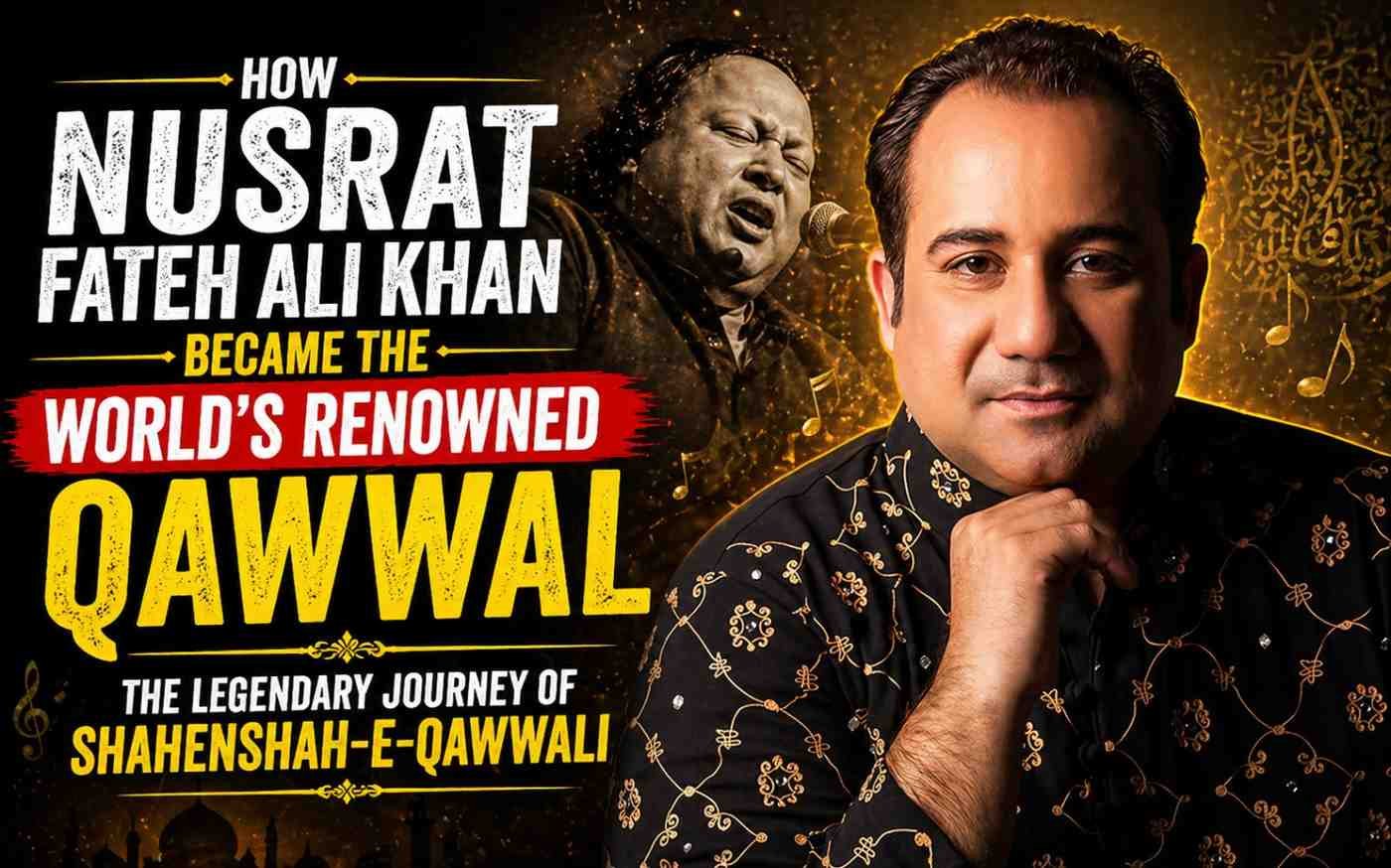
In the annals of Sufi music, few names shine as brightly as Ustad Nusrat Fateh Ali Khan. Revered as the Shahenshah-e-Qawwali (Emperor of Qawwali), he didn’t just sing—he transported listeners into a spiritual trance that transcended language, borders, and cultures. A new biographical video from Khabargaon’s Kissa EP 106 dives deep into his extraordinary life, revealing how a boy from Faisalabad rose to redefine Qawwali for the world. Here’s the captivating story drawn straight from the video.
A Chilly Night That Changed Everything: The 1985 WOMAD Festival
The video opens with a scene that captures the magic of Nusrat’s genius. It’s 1985, Mersea Island, UK—WOMAD festival. Thousands of English rock fans, expecting something familiar, stare confused at the traditional setup: harmoniums, tablas, and a group of Pakistani musicians. Then Nusrat begins. His voice rises, powerful and soul-stirring. Within minutes, the crowd is in a collective trance—a psychological phenomenon known as “Collective Effervescence.” No language barrier could stop it. This single performance catapulted Qawwali onto the global stage and earned Nusrat international acclaim.
Humble Beginnings in Faisalabad
Born in Faisalabad (then Lyallpur), Pakistan, Nusrat grew up in a family steeped in Qawwali tradition. His father, Ustad Fateh Ali Khan, was a respected Qawwal himself. Yet the elder Khan had other dreams for his son. He wanted Nusrat to become a doctor, believing the life of a Qawwal carried too much social stigma at the time. Singing was strictly forbidden in the household.
But destiny had other plans.
The Dream That Launched a Legend (1964)
In 1964, tragedy struck. Ustad Fateh Ali Khan passed away suddenly. A devastated 16-year-old Nusrat was visited by his father in a dream. The message was clear: “Sing.” That divine command became the turning point. Nusrat threw himself into music with unmatched dedication.
He began rigorous riyaz (practice) sessions—often lasting up to 10 hours a day. This intense training sharpened his voice into an instrument of pure power and emotion. It also, the video notes, contributed to the health challenges, including obesity, that would later haunt him.
Revolutionary Innovations That Bridged Worlds
Nusrat wasn’t content with tradition alone. He experimented boldly—introducing faster tempos and intricate Sargam (note improvisations) that made Qawwali more accessible and electrifying to Western ears. These changes weren’t just stylistic; they were revolutionary. In Japan, audiences nicknamed him “Budai”—the Singing Buddha—for the meditative, almost hypnotic quality of his performances.
His global breakthroughs included landmark collaborations with Peter Gabriel and a haunting track with Pearl Jam’s Eddie Vedder on the Dead Man Walking soundtrack. Jeff Buckley famously called him the “Elvis of the East.”
The Deep (and Controversial) Bond with India
Despite being Pakistani, Nusrat shared a profound connection with India. He performed at Rishi Kapoor’s wedding, created the timeless cult classic “Afreen Afreen” with poet Javed Akhtar, and delivered bold pro-India statements at a High Commission event. These moves drew threats from groups like Shiv Sena amid rising political tensions. Yet Nusrat’s philosophy remained simple and powerful: music serves humanity above religion or nationality.
A Tragic End and Enduring Legacy
At the peak of his fame, tragedy struck again. In 1997, at just 48 years old, Nusrat passed away in London while undergoing treatment. The video explores the lingering mystery and conspiracy theories surrounding his death, including claims of infected dialysis machines. His physical toll from years of intense riyaz and health struggles played a role, but his voice remained immortal.
Before leaving, he passed the torch to his nephew, Rahat Fateh Ali Khan, who has carried forward the 600-year family legacy with hits like “Mann Ki Lagan.” Today, Nusrat’s recordings continue to inspire new generations across continents.
Why Nusrat Fateh Ali Khan Still Moves Millions
The Kissa EP 106 episode isn’t just a biography—it’s a tribute to a voice that could awaken even the “dead souls,” as one commenter put it. From humble Faisalabad roots to stadiums worldwide, Nusrat proved that true art knows no boundaries. His life reminds us that greatness often emerges from adversity, dreams, and relentless passion.
What’s your favorite Nusrat Fateh Ali Khan song or memory? Share in the comments below. Whether it’s the spiritual depth of his Sufi kalams or the sheer energy of his live performances, his legacy as the undisputed king of Qawwali lives on—proving that some voices are truly eternal.