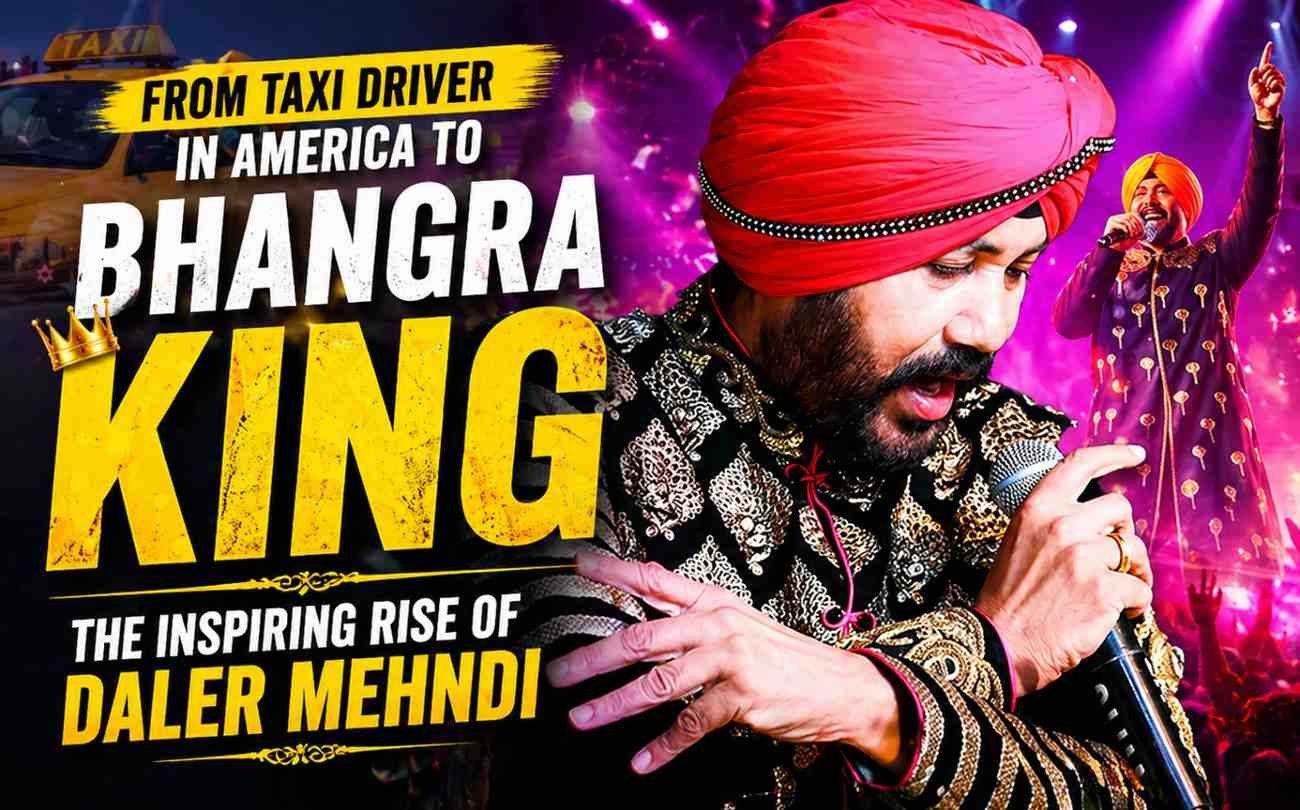
Daler Mehndi’s “Tunak Tunak Tun” is more than just a song — it’s a cultural phenomenon that turned Punjabi Bhangra into a global party anthem. But behind the flashy turbans, high-energy performances, and chart-topping hits lies a story of grit, struggle, and controversy. A recent YouTube video- dives deep into his extraordinary journey — from driving taxis in the United States to becoming one of India’s most beloved Punjabi pop icons — and reveals the “real story” behind the long-running human trafficking case that nearly derailed his career.
Humble Beginnings: From Patna to Musical Roots
Born Daler Singh on August 18, 1967, in Patna, Bihar, into a Punjabi Sikh family, Mehndi showed a love for music from a very young age. He grew up singing shabads at the local gurdwara and later ran away from home at just 11 years old to pursue formal training in Gorakhpur. After honing his skills, he moved to Delhi, where he performed ghazals and built a small following. His early life was far from glamorous — it was marked by passion, sacrifice, and the dream of making it big in the music world.
The Taxi Driver Chapter: Struggles in the Land of Opportunity
In the late 1980s, like many aspiring artists, Mehndi took a bold leap and moved to the United States. He settled in California and San Francisco, where he earned a living as a taxi driver. The video highlights this phase as the ultimate test of resilience: long hours behind the wheel, cultural adjustments, and the constant hustle to save money while keeping his musical dreams alive. Far from the stage lights, he was just another immigrant chasing a better future. This period of hardship later became a powerful part of his underdog narrative — proving that even a taxi driver could conquer the music industry.
Return to India and the Birth of Bhangra Pop Stardom
Mehndi returned to India in 1991 and formed his own band. The 1990s belonged to him. He revolutionized Punjabi music by blending traditional Bhangra beats with modern pop, creating an energetic, dance-friendly sound that appealed to both Indian and international audiences. His breakthrough hits include:
- Bolo Ta Ra Ra (1995)
- Tunak Tunak Tun (1998) — the iconic track with its catchy “da da da” hook and groundbreaking video
- Ho Jayegi Balle Balle
- Na Na Na Na and many more
Daler Mehndi’s signature style — colorful turbans, high-octane stage presence, and fusion of folk with pop — made him a household name. He didn’t just sing; he performed with infectious energy that made audiences jump to their feet.
The Shadow of Controversy: The 2003 Human Trafficking Case
The video doesn’t shy away from the darker chapter in Mehndi’s life. In the late 1990s, he and his brother Shamsher Singh (who passed away in 2017) were accused of running an illegal immigration racket. According to complainants, the brothers allegedly collected “passage money” (reportedly around ₹1 crore in total) from people wanting to go to the US and Canada. They supposedly disguised these individuals as members of Daler Mehndi’s performance troupe for foreign tours in 1998 and 1999. Once abroad, some of the “troupe members” stayed behind to work instead of returning.
The case was filed in 2003 by Bakshish Singh in Patiala. In 2018, a court convicted Daler Mehndi and his brother of human trafficking and cheating, sentencing them to two years in jail. Mehndi was briefly imprisoned but received bail. An appeal was dismissed in 2022, leading to another short stint in Patiala Central Jail before he was again granted relief by the Punjab and Haryana High Court.
The video explores “the truth behind the case and how he got trapped.” Mehndi has maintained his innocence throughout, claiming the accusations stemmed from misunderstandings around troupe arrangements and that he was unfairly targeted. Supporters argue it was a common practice in the entertainment industry at the time and that he became a scapegoat. Critics, however, point to the complaints as evidence of exploitation. The legal battle spanned nearly two decades, but Mehndi continued performing and releasing music even during the proceedings.
Resilience and Legacy: Beyond the Headlines
Despite the legal troubles, Daler Mehndi’s popularity never faded. He remains a Bhangra icon, with millions of fans across generations. In recent years, he has focused on positive initiatives like the Daler Mehndi Green Drive (also known as DM Green Drive), where he plants thousands of trees during his tours and encourages environmental awareness.
His story is a classic tale of rags-to-riches: a taxi driver who became a superstar through talent, hard work, and charisma. The controversies tested his character, but they also added depth to his narrative of perseverance.
Why This Story Matters Today
The YouTube video beautifully captures both the inspirational rise and the complicated reality of fame. In an era where celebrity scandals often overshadow achievements, Daler Mehndi’s journey reminds us that success is rarely linear. It’s filled with highs, lows, triumphs, and lessons.
Whether you’re a long-time fan dancing to “Tunak Tunak Tun” or someone discovering his story for the first time, one thing is clear: Daler Mehndi’s voice — and his story — continues to resonate.
Watch the full video here: Daler Mehndi | टेक्सी ड्राइवर की टॉप सिंगर बनने की कहानी (YouTube)
What do you think — does Daler Mehndi’s music outweigh the controversies? Share your thoughts in the comments below!