In twentieth-century Hindi literature, few figures hold as towering and transformative a stature as Harishankar Parsai (1924–1995). A master satirist, essayist, and story writer, Parsai elevated Hindi satire from lighthearted comedy to a sharp instrument of social critique, political commentary, and philosophical inquiry.
In a rare and intimate interview recorded for All India Radio (Radio Autobiography – Part 1) and preserved by the Prasar Bharati Archives, Parsai sat down with Dr. Shyam Sunder Mesh to reflect on his early life, family struggles, formative influences, and the evolution of his literary process. The discussion offers a rare glimpse into how a sensitive boy from rural Madhya Pradesh transformed personal tragedy and social inequality into biting, world-changing satire.
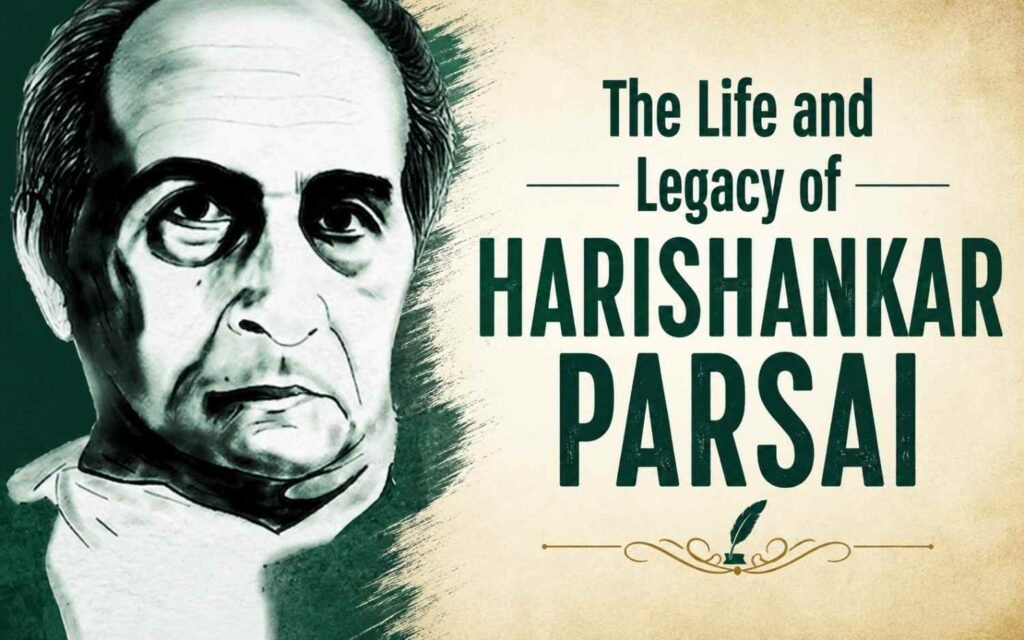
The Life and Legacy of Harishankar Parsai
Early Life: From Malguzar Roots to Financial Struggle
Born on August 22, 1924, in Jamani village near Itarsi in Madhya Pradesh, Harishankar Parsai came from a traditional agrarian family of rural Brahmins. Despite their heritage, his ancestors did not practice priesthood; instead, they were Malguzars (landowners) who managed large-scale farming.
However, family disputes and economic shifts forced Parsai’s father to abandon village agriculture when Parsai was just two years old. Moving his small family via bullock cart to Itarsi Junction, Parsai’s father entered the timber and charcoal business, taking forest leases and moving from village to village as the work demanded.
Key Life Milestones & Early Challenges
| Period / Year | Event / Milestone | Impact on Parsai’s Life |
| 1924 | Born in Jamani village, MP | Deeply connected him to rural Indian social structures. |
| Late 1920s | Family moves to Itarsi | Exposed to transient living and commercial forestry life. |
| 1939 | Passes Matriculation; Mother dies | Plague epidemic devastates the village; family faces economic ruin. |
| 1941–1942 | Teacher Training in Jabalpur | Completes Diploma in Teaching (Dip. T.); embarks on an academic career. |
| 1947 | First Publication in Naya Samaj | Publishes his early story on Independence Day, launching his literary career. |
The late 1930s brought immense tragedy. A devastating outbreak of plague claimed Parsai’s mother under terrifying conditions. Shortly after, his father fell ill, placing the entire burden of supporting five younger siblings squarely on Parsai’s 18-year-old shoulders.
Formative Influences: Mentors, Friends, and Class Consciousness
Parsai credits several key figures for shaping his intellectual outlook and providing guidance during his youth:
- His Father: A tall, commanding figure who rode horseback through forest leases, representing courage, resilience, and strength.
- His Aunt (Bua): A source of unyielding optimism who met every crisis with her signature catchphrase: “No need to worry, everything will be alright”.
- Keshav Chandra Bagga (Bagga Master): A dedicated, khadi-wearing English teacher who opened Parsai’s mind to world history, social structures, and critical thinking.
- Gajanan Madhav ‘Muktibodh’: The legendary Hindi poet who educated, mentored, and intellectually grounded Parsai during his adult years.
The Awakening of Class Consciousness
Parsai’s sharp awareness of social inequality was forged in childhood. He vividly recalls an incident in school where a wealthy student lost a fountain pen. Despite having no connection to the incident, Parsai was subjected to intense interrogation simply because he came from a struggling family.
When his father confronted the school administration, the matter was dropped, but the realization remained: society treats the poor with inherent suspicion. This moment sparked Parsai’s lifelong commitment to analyzing class dynamics and fighting social injustice through literature.
The Journey into Literature and Satire
Parsai’s career began in education. After completing his teacher training in Jabalpur, he worked as a school teacher while writing in his spare time. His entry into active writing was directly linked to the socialist political movements of the late 1940s.
Prompted by the fiery editorials of socialist publication Naya Samaj (edited by Pandit Bhawani Prasad Tiwari), Parsai submitted his first short piece on Diwali night in 1947. The story—inspired by seeing a wealthy family’s driver recklessly run over a poor child’s toy while carrying spoiled sweets—was met with instant acclaim.
Parsai’s approach to writing was distinct:
- Writing Environment: He wrote tirelessly—during free periods at school, late at night, and in the early hours of the morning.
- Observation over Ideology: He rejected abstract idealism, believing that true literature emerges from lived experience combined with a historical and socio-economic understanding.
- Humor as a Weapon: Satire was not a trick to make people laugh; it was a lens to expose institutional corruption, hypocrisy, and economic exploitation.
Timeless Relevance of Harishankar Parsai
Harishankar Parsai’s radio autobiography provides a rare look at an artist who transformed personal hardships into a tool for public empowerment. By refusing to let poverty paralyze him, he developed a profound empathy for the downtrodden and an unforgiving eye for systemic exploitation.
Today, his works remain mandatory reading for anyone seeking to understand modern Indian society, politics, and the enduring power of satire.
For literature enthusiasts and history buffs, listening to the full interview on the Prasar Bharati Archives YouTube Channel
offers an unmatched opportunity to hear one of India’s greatest literary minds speak in his own calm, reflective voice.