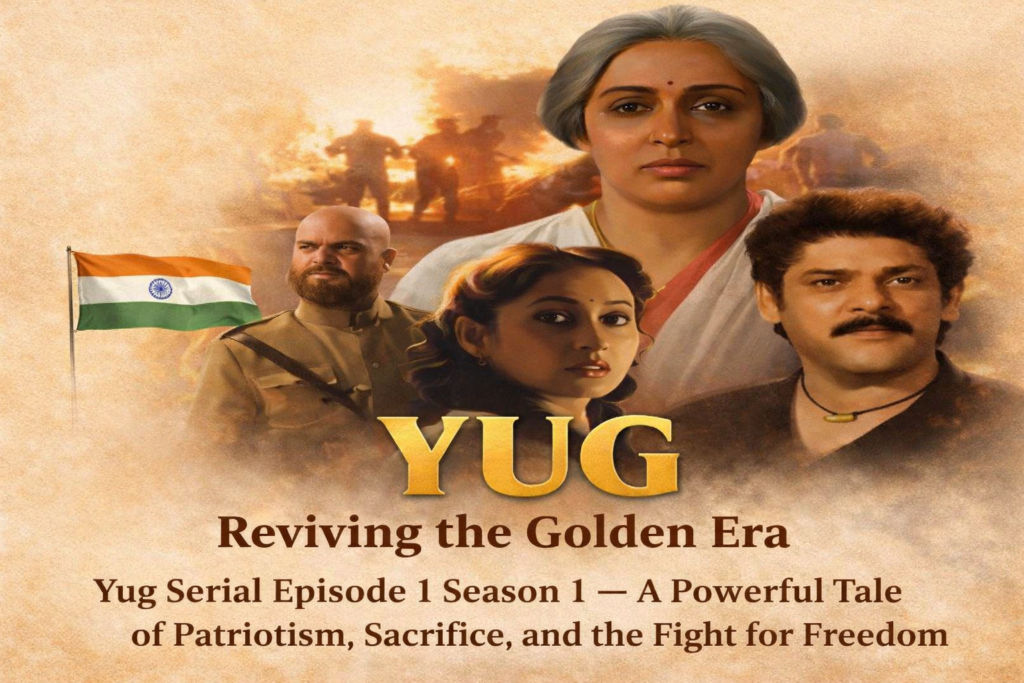
In an era dominated by high-budget web series and flashy entertainment, few shows capture the raw emotion, historical depth, and national pride quite like the classic Doordarshan serial Yug. Aired originally from 1996 to 1997 on DD National, this iconic Hindi drama brought to life the struggles of Indian freedom fighters during British rule. Produced and directed by Sunil Agnihotri, Yug starred legendary actors including Hema Malini, Shahbaaz Khan, Pankaj Dheer (as Ali Khan), and even featured early appearances by talents like Irrfan Khan.
Thanks to channels like RAAJ SERIES preserving these gems under the hashtag #OldIsGold, Episode 1 of Season 1 is now available on YouTube (uploaded March 2024, link: YouTube. With over 32,000 views and counting, this episode sets a gripping foundation for the series. If you grew up watching Doordarshan or love stories of India’s independence movement, this is pure nostalgia with powerful performances and thought-provoking dialogues.
Episode Overview: From Riots to Revolution
The episode opens with haunting dramatic music and a somber voiceover narrating the chaos engulfing India – riots, violence, and despair. An elderly woman collapses in silence amid the turmoil, symbolizing the nation’s pain. The narrator questions the futility: “What more can be done when everything is over?” as scenes show people celebrating atop piles of corpses – a stark reminder of the human cost of division and unrest.
The story then shifts to a tense domestic setting in the present (or immediate post-independence era). A mother, a former freedom fighter, returns home worried about her daughter Usha. Usha has sent her children away for safety amid roaming rioters. What follows is an intense mother-daughter debate that forms the emotional core of the episode:
- The mother urges saving the country from the “fire of violence.”
- Usha, exhausted and bitter, argues one must live for oneself: “My mind and body are deteriorating.” She criticizes the freedom struggle, pointing out personal losses – her son-in-law killed by goons with no full justice – and questions what the sacrifices achieved.
- The mother defends passionately: Society, not the country, inflicted the wounds. She holds hope that sacrifices will one day transform the “dirty society.”
This generational clash beautifully highlights the personal toll of patriotism.
Flashback to the Heart of the Struggle: Family Betrayals and British Loyalty
The narrative seamlessly transitions with music and chants of “Jai” into the pre-independence era. We meet the family of Rai Bahadur Danna (also referred to as Dina Nath in series lore), a pro-British elite figure. He scolds his daughter Nimmo for roaming the streets at night, fearing judgment from “foreign guests.” Nimmo boldly declares she’s fighting for freedom.
The family argument escalates:
- Rai Bahadur mocks the 1857 Revolt (“80 years and nothing”), Gandhi’s Salt Satyagraha (“starving people”), and Nehru’s push for complete independence.
- He proudly claims loyalty to the British, who have rewarded him with land and villages.
- Nimmo counters with examples of true sacrifice, like Bhagat Singh.
- The mother (Rukmini/Rukmani) intervenes, but tensions rise when Rai Bahadur confronts her for instilling “pro-slavery thoughts” in the daughters despite his efforts to shield them.
In a private moment, Rai Bahadur thanks a British officer (possibly Hamilton) for favors while complaining about Nimmo’s rebellious influence.
The Revolutionary Spark: Plan to Free Ali Khan
Parallel to the family drama, revolutionary fervor builds. Insults fly at a British havaldar branded a “thug and slave” for betraying his country. A group of freedom fighters discusses freeing the imprisoned revolutionary Ali Khan (played by Pankaj Dheer). His transfer to a secret location is imminent that very night.
A young woman (linked to Rukmani) brings critical intelligence from the jailer – a family friend. The group vows to rescue him at any cost, despite past failures. The episode builds to high-stakes action: dramatic pursuits, Ali Khan’s interrogation in jail, arrival of police with Hamilton, and intense confrontations filled with applause-worthy music and tension.
Key Themes That Make Yug Timeless
- Patriotism vs. Self-Preservation: The episode masterfully contrasts selfless sacrifice with pragmatic cynicism.
- Generational and Ideological Conflict: Pro-British elites vs. Gandhian satyagrahis and armed revolutionaries.
- Personal Cost of Freedom: Losses, betrayals, and the question of whether it was all worth it.
- Hope Amid Despair: Even in darkness, the belief that sacrifices will cleanse society endures.
The core message resonates deeply: True change demands unwavering commitment, even when the nation seems “discolored” by violence and corruption.
Cast Highlights and Legacy
Yug boasted a stellar ensemble. Hema Malini brought grace and strength to her role (often associated with the patriotic mother figures), while Pankaj Dheer embodied the fiery revolutionary Ali Khan. Shahbaaz Khan (as Virendra Singh/Veeru in the broader series) and supporting actors delivered memorable performances full of conviction.
The series’ opening theme “Yug Badla, Badla Hindustan” became iconic, and its portrayal of the freedom struggle – blending history with fictional drama – educated and inspired millions during its original DD National run.
Why You Should Watch Episode 1 Today
Whether you’re rediscovering childhood favorites or introducing younger generations to India’s independence saga, Yug Episode 1 delivers edge-of-the-seat drama, powerful dialogues, and emotional depth rarely seen in modern TV. It’s a reminder that freedom wasn’t free – and the fight against injustice continues in new forms.
If you enjoyed this recap, stay tuned for more episodes from the RAAJ SERIES uploads. Yug isn’t just old television – it’s a piece of our collective heritage.
Jai Hind! Let the revolution of the heart begin again.
What are your favorite memories from Yug or other Doordarshan classics? Share in the comments below!






I want to watch who series where should I watch it on YouTube it’s not available