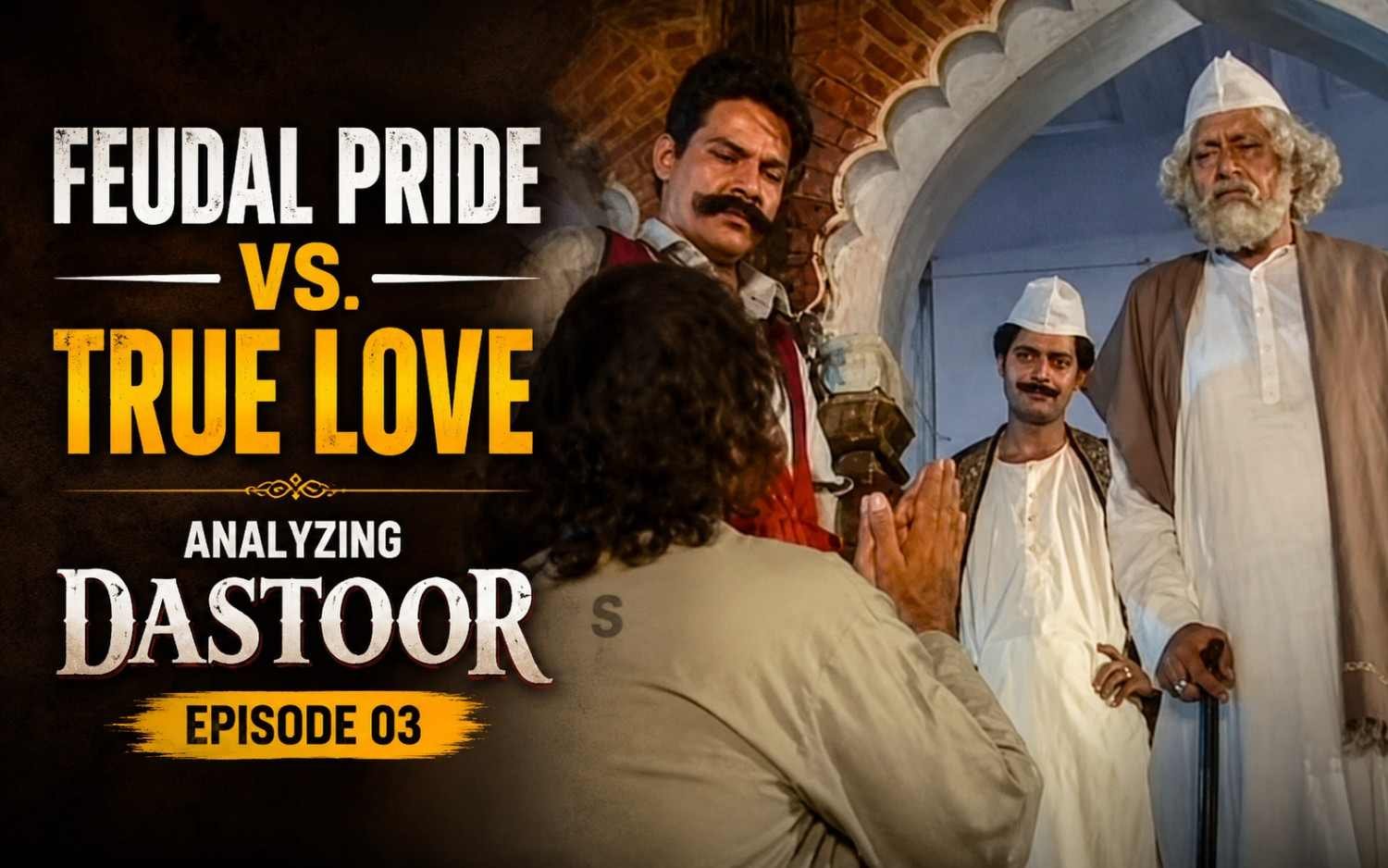
In the classic television archive of Doordarshan, period family dramas served as a mirrors reflecting the societal tensions between decaying aristocratic traditions and the progressive ideals of modern youth. Preserved by the Prasar Bharati Archives, the classic series “Dastoor” (Tradition/Custom) provides a dramatic exploration of elite feudal pride, class hypocrisy, and the human cost of rigid social norms.
Episode 03 delivers an emotional storyline centered on the confrontation between a stubborn Nawab father and his principled elder son, revealing how ancient customs can shatter family bonds.
Feudal Pride vs. True Love: Analyzing Doordarshan’s Dastoor (Episode 03)
The Core Theme: The Shackles of Feudal Custom (Dastoor)
The overarching narrative of Dastoor revolves around the Zamindari estate of Zamana, ruled by Nawab Sadaqat Hussain Khan. Deeply entrenched in patriarchal pride, class hierarchy, and ancestral dignity, the Nawab treats family honor as an unyielding law.
When his educated elder son, Tasadduq Hussain Khan (nicknamed Tadi), falls in love with Naseeba—the orphaned niece of the mansion’s syce (horse groom, Roshan)—the Nawab perceives it not as a simple romantic affair, but as an existential threat to his lineage.
Feudal Elite (Nawab Sadaqat) ──[Enforces Class Rules]──> Forced Disownment
                                                               │
Progressive Youth (Tasadduq) ───[Rejects Class Barrier]────> Stands with Naseeba
Episode 03 focuses on the tragic reality that when rigid traditions collide with genuine human emotion, the ruling class often resorts to coercion, violence, and disownment to maintain control.
Key Characters and Relationships in Episode 03
To better understand the socio-economic dynamics driving the narrative, the table below outlines the primary characters, their designations, and their central motivations in this episode:
| Character | Role / Designation | Social Position | Motivations & Key Actions |
| Nawab Sadaqat Hussain Khan | Patriarch / Estate Owner | Feudal Aristocrat | Absolute ruler of the mansion; demands aristocratic marriage for Tasadduq to preserve lineage. |
| Tasadduq “Tadi” Hussain Khan | Elder Son | Educated Heir | Deeply in love with Naseeba; openly rebels against class division and aristocratic hypocrisy. |
| Tajammul Hussain Khan | Younger Son | Hot-headed Heir | Aggressive and impulsive; acts as his father’s muscle, causing conflicts with lower-class workers. |
| Naseeba | Protagonist’s Love Interest | Lower-Class Orphan | Target of the Nawab’s wrath; protected fiercely by her aunt and Tasadduq. |
| Roshan & Her Husband | Syce / Mansion Servants | Working-Class Staff | Brutalized by estate henchmen for refusing to force Naseeba into an unwanted marriage. |
| Noor Shah | Opportunistic Suitor | Wealthy Outsider | Brought in by the Nawab’s men to forcibly marry Naseeba and remove her from Tasadduq’s life. |
Plot Breakdown: The Conflict Unfolds
1. The Matriarch’s Plea and Family Expectations
The episode opens with Tasadduq facing intense pressure from the elder women of the family (the Grandmother/Dadi). The family has arranged his marriage to Sakina, the daughter of Nawab Sabir Hussain Khan of Akbarpur.
The Grandmother urges Tasadduq to treat his feelings for Naseeba as a temporary romantic phase, comparing lower-class girls to “wild forest flowers” that can be enjoyed momentarily but have no place in a royal palace garden. Tasadduq firmly refuses, stating that marrying Sakina while loving Naseeba would destroy three lives.
2. Feudal Oppression and Working-Class Resistance
Unwilling to accept Tasadduq’s refusal, Nawab Sadaqat Hussain turns his anger toward Naseeba’s working-class family.
- Physical Coercion: The Nawab’s henchmen brutally assault Naseeba’s uncle, Banne Khan, punishing him because his niece dared to capture the young Nawab’s heart.
- Forced Engagement: To eliminate Naseeba from the picture, the Nawab arranges her marriage to Noor Shah, an older, disreputable man from Lucknow.
- Tasadduq’s Intervention: When Tasadduq discovers that a wedding dress (jora) has been sent by the Nawab to force the marriage, he personally visits Naseeba’s home. He reassures her aunt that he will honor Naseeba as his bride and wear that very dress on their wedding day.
3. Hypocrisy of the Aristocracy: Marriage vs. Keep
In a telling conversation between the Nawab and his estate manager (Munshi Ji), the underlying hypocrisy of the elite class is laid bare. The estate manager suggests that if Tasadduq is so enamored with Naseeba, he should keep her as a mistress (rakeel), noting that keeping mistresses is considered an accepted social norm among wealthy nobles.
Tasadduq rejects this compromise, demanding equal dignity, respect, and a legal marriage for the woman he loves.
4. The Climax: Disownment and Departure
The narrative reaches its peak when Tajammul (the younger brother) attempts to bribe Naseeba’s family with money, only to have it thrown back in his face.
When Nawab Sadaqat realizes Tasadduq will not yield to threats or social pressure, he delivers an ultimatum: submit to feudal custom (Dastoor) or leave. Tasadduq responds that a home where freedom and love are suffocated is no longer a shelter, but a burden.
Enraged, Nawab Sadaqat formally disowns Tasadduq, stripping him of his inheritance, title, and family name, casting him out of the mansion.
Social Commentary and Dramatic Value
Dastoor Episode 03 stands out for its sharp critique of systemic inequality in post-colonial India:
- Class Division: It illustrates how the ruling elite use economic dominance to dictate the personal lives of the working class.
- False Prestige: The episode contrasts the moral purity of the working-class family—who refuse money in defense of their dignity—with the moral decay of the aristocracy.
- The Price of Progress: Tasadduq represents the modern generation willing to sacrifice wealth, comfort, and social status for personal integrity and social equality.
Conclusion
Episode 03 of Dastoor delivers a compelling, emotionally charged chapter on the clash between outdated social traditions and personal freedom. Through strong performances, evocative dialogues, and classic Doordarshan aesthetic realism, it remains a timeless piece of Indian television heritage.
The full episode is available to watch on the official Prasar Bharati Archives YouTube Channel