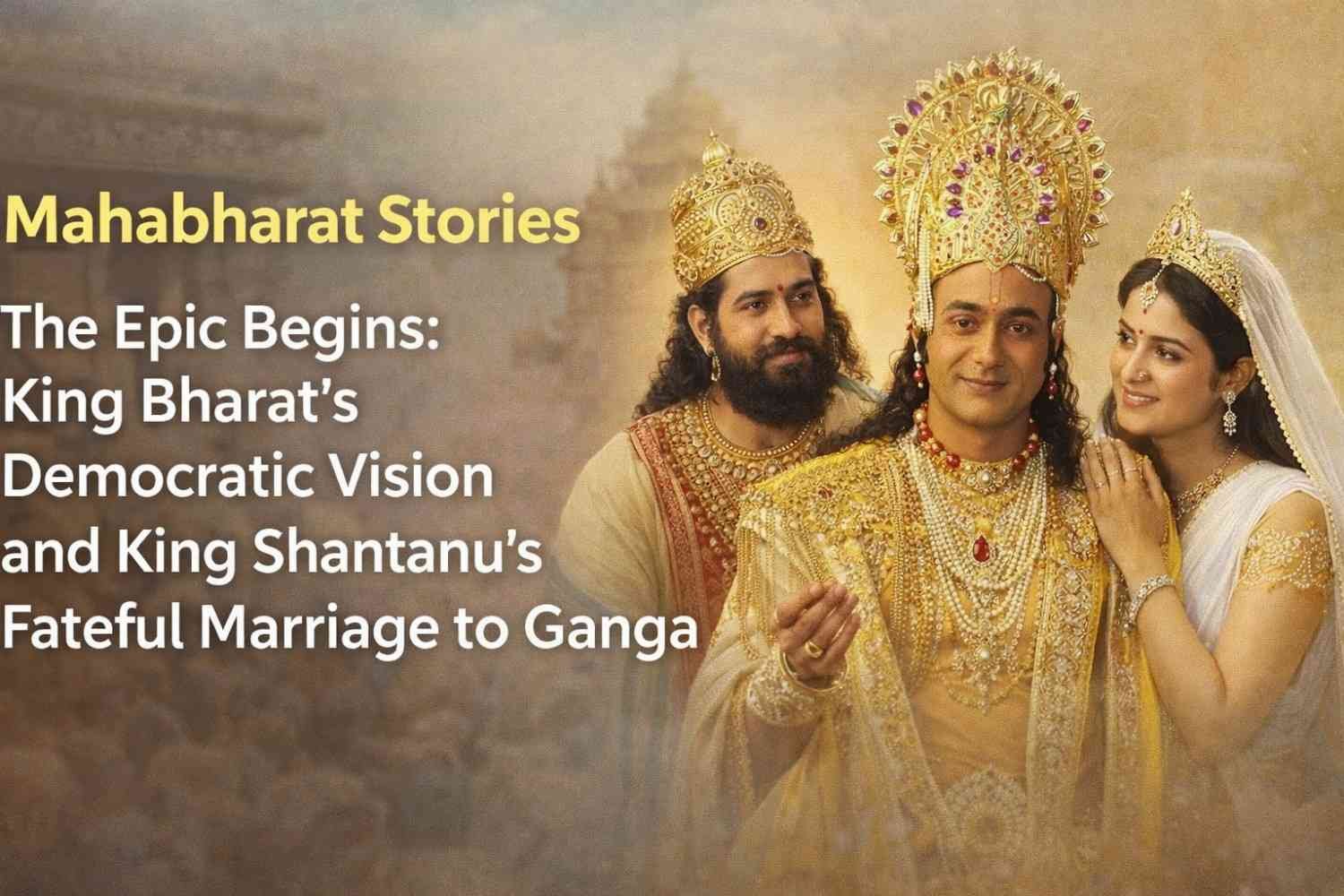
With over 51 million views, this timeless narration from Pen Bhakti’s Mahabharat Stories (based on B.R. Chopra’s iconic 1988 TV series) takes us straight to the roots of one of the world’s greatest epics. Narrated by the eternal voice of “Time” itself, Episode 01 lays the foundation for the Mahabharata — a saga of dharma, duty, merit, and the devastating consequences of a single promise.
Here’s a complete, engaging retelling of everything covered in the video — perfect for mythology lovers, students, or anyone discovering the Kuru dynasty for the first time.
1. The Voice of Time Introduces the Greatest Story Ever Told
The episode opens dramatically. The narrator, “Time,” declares:
“I am Time… and I shall tell you the story of the rise and fall of Indian culture, of the eternal battle between good and evil.”
This sets the tone — not just a family tale, but a profound exploration of human nature, kingship, and destiny.
2. The Arrival of Raja Bharat & the Birth of Democratic Thinking
Many generations before the Pandavas and Kauravas, King Bharat ruled Hastinapur gloriously. He had nine sons, yet he made a revolutionary decision that planted the very first seed of merit-based succession in Indian history.
Instead of handing the throne to his own bloodline, Bharat chose Bhumanyu — a commoner’s son (son of a sage) — as his successor because of the young man’s wisdom, courage, and capability.
This bold move shocked the court but taught a powerful lesson:
“The throne belongs to the worthy, not merely to those born in the palace.”
King Bharat sowed the idea of true democracy centuries before the modern world even dreamt of it.
3. Generations Later: King Shantanu’s Reign Begins
The story fast-forwards. The Kuru kingdom is now ruled by King Shantanu — a noble, just, and powerful ruler loved by his people. Everything seems perfect… until one fateful day by the river.
4. The Divine Meeting & the Sacred Marriage
While hunting near the Ganges, Shantanu sees a breathtaking woman — none other than Ganga, the river goddess herself. Struck by love at first sight, he asks for her hand in marriage.
Ganga agrees, but only on one unbreakable condition:
“You will never question anything I do — no matter what.”
Blinded by love and desire, Shantanu gives his solemn promise.
The marriage is celebrated with royal grandeur. The kingdom rejoices, unaware that this single vow will change the destiny of the entire Kuru lineage.
5. The Heart-Wrenching Secret: Ganga Kills Her Own Sons
Soon, Ganga gives birth to sons. But to everyone’s horror, she takes each newborn to the river and drowns him.
Shantanu is devastated. Yet, bound by his promise, he cannot utter a single word of protest. The court whispers, ministers criticise the king’s weakness, and priests remind him that every action has consequences.
Only later does the truth emerge: Ganga and the eight Vasus (celestial beings) were cursed to be born as humans. By drowning the first seven sons, Ganga was actually freeing them from the curse and returning them to heaven. The eighth son — Devavrat (who would later become the legendary Bhishma) — was destined to stay on earth.
Shantanu watches in silent agony as his wife takes their children one by one. The promise that once seemed romantic now becomes his greatest curse.
Key Moral Lessons from the Episode
- Merit over Bloodline: King Bharat showed that true leadership is earned, not inherited.
- Think Before You Promise: Shantanu’s hasty vow teaches that words once spoken can bind you forever.
- Duty vs Emotion: A king’s personal happiness must sometimes bow before larger dharma.
- Karma & Destiny: Every action — even those that seem cruel — may serve a higher purpose.
Why This Episode Still Resonates in 2026
Even after decades, B.R. Chopra’s storytelling, powerful dialogues, and the soul-stirring narration make this episode feel fresh and profound. It beautifully sets up the entire Mahabharata saga — from the birth of Bhishma to the future wars of Kurukshetra.
Watch the full episode here: YouTube
What’s your favourite part of the Mahabharata origin story?
Drop your thoughts in the comments — and share this article with fellow mythology enthusiasts!
Jai Shri Krishna! May the timeless wisdom of the Mahabharata guide us all.