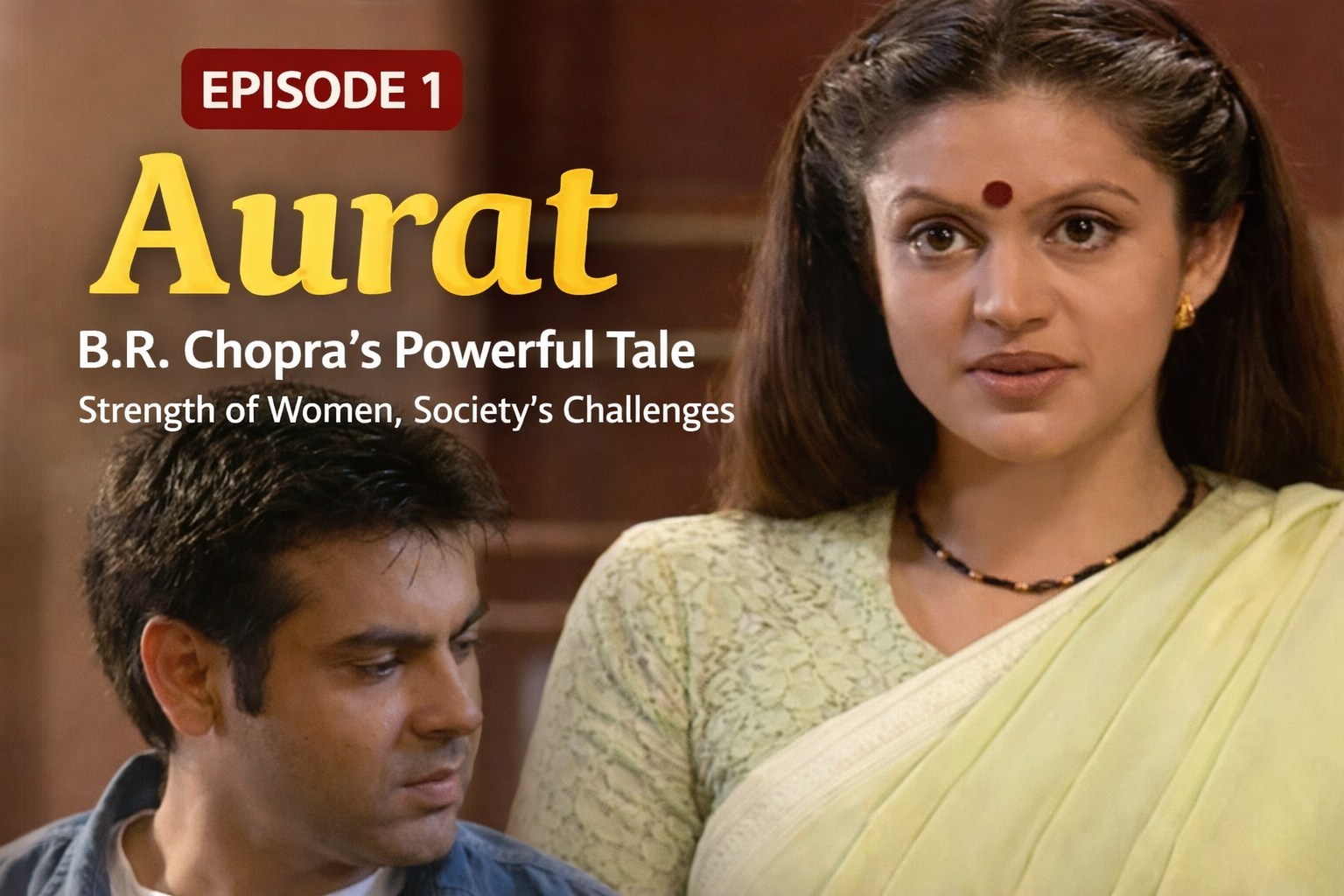
In the late 1990s, when Indian television was still finding its voice beyond mythological epics, B.R. Chopra — the legendary producer behind Mahabharat — brought something refreshingly bold and grounded to Doordarshan. Aurat, a groundbreaking family drama that aired in 1997, shone a spotlight on the everyday struggles, dreams, and resilience of Indian women. The very first episode, now available on YouTube via the official BR Chopra & Other TV Serials channel, serves as a masterful introduction to this long-running classic (with hundreds of episodes in its full run).
The Visionary Behind the Story
Baldev Raj Chopra didn’t just make entertainment — he made statements. From his iconic films like Insaaf Ka Tarazu to the unforgettable Mahabharat, Chopra’s work consistently tackled social issues with sensitivity and courage. Aurat was no exception. Directed in parts by his son Ravi Chopra, the series starred a young Mandira Bedi in the lead role of Pragati, supported by a strong ensemble including Bijay Anand, Aman Verma, and others. The show focused unapologetically on the challenges faced by women in middle-class Indian households — education, marriage, family expectations, and the fight for personal identity.
Episode 1 – Setting the Stage for Empowerment
Clocking in at around 24 minutes, the inaugural episode wastes no time diving into the heart of the matter. Viewers are introduced to Pragati, a determined middle-class young woman whose quiet strength and inner fire immediately draw you in. The episode beautifully establishes the societal canvas: traditional family structures, gender roles that limit aspirations, and the subtle (and not-so-subtle) pressures women face daily.
Without heavy-handed preaching, the storytelling shows Pragati beginning to navigate — and gently question — these norms. Early scenes highlight her relationships with family members, hinting at the conflicts to come as she seeks more from life than what tradition prescribes. Mandira Bedi’s performance is natural and compelling right from the start; her expressive eyes and poised demeanor make Pragati feel like someone you already know — the sister, daughter, or friend who dares to dream bigger.
The episode also teases the larger canvas of the series: multiple women characters whose lives intertwine, each representing different facets of womanhood in 1990s India. The signature title sequence and soulful background score (typical of BR Chopra productions) add emotional depth, making you feel invested from the very first frame.
Why This Episode Still Resonates in 2026
More than 25 years later, Aurat Episode 1 feels remarkably fresh. Issues like a woman’s right to education after marriage, balancing family duties with personal ambitions, and standing up against patriarchal mindsets remain painfully relevant. Pragati’s journey — which begins in earnest in this very episode — mirrors the stories of countless women who continue to break barriers today.
The serial’s strength lies in its realism. There are no larger-than-life villains or fairy-tale solutions; instead, it presents nuanced family dynamics where love and conflict coexist. BR Chopra’s signature style — powerful dialogues, strong female characters, and a clear social message — shines through brilliantly.
Key Highlights to Watch For
- Mandira Bedi’s poised yet fiery introduction as Pragati
- Authentic portrayal of middle-class Indian household tensions
- Subtle yet powerful commentary on women’s education and independence
- Emotional family interactions that set up future drama
Where to Watch
Catch the full Episode 1 (and the entire series) here: YouTube
Whether you’re a fan of classic Doordarshan dramas, Mandira Bedi’s early work, or stories that celebrate women’s inner strength, Aurat Episode 1 is the perfect starting point. It’s not just television — it’s a cultural mirror that still reflects our society with honesty and hope.
What did you think of Pragati’s first steps toward independence? Drop your thoughts in the comments — and don’t forget to share this article with anyone who loves meaningful Indian TV dramas!
Stay tuned for more recaps and insights from the world of classic Indian television.