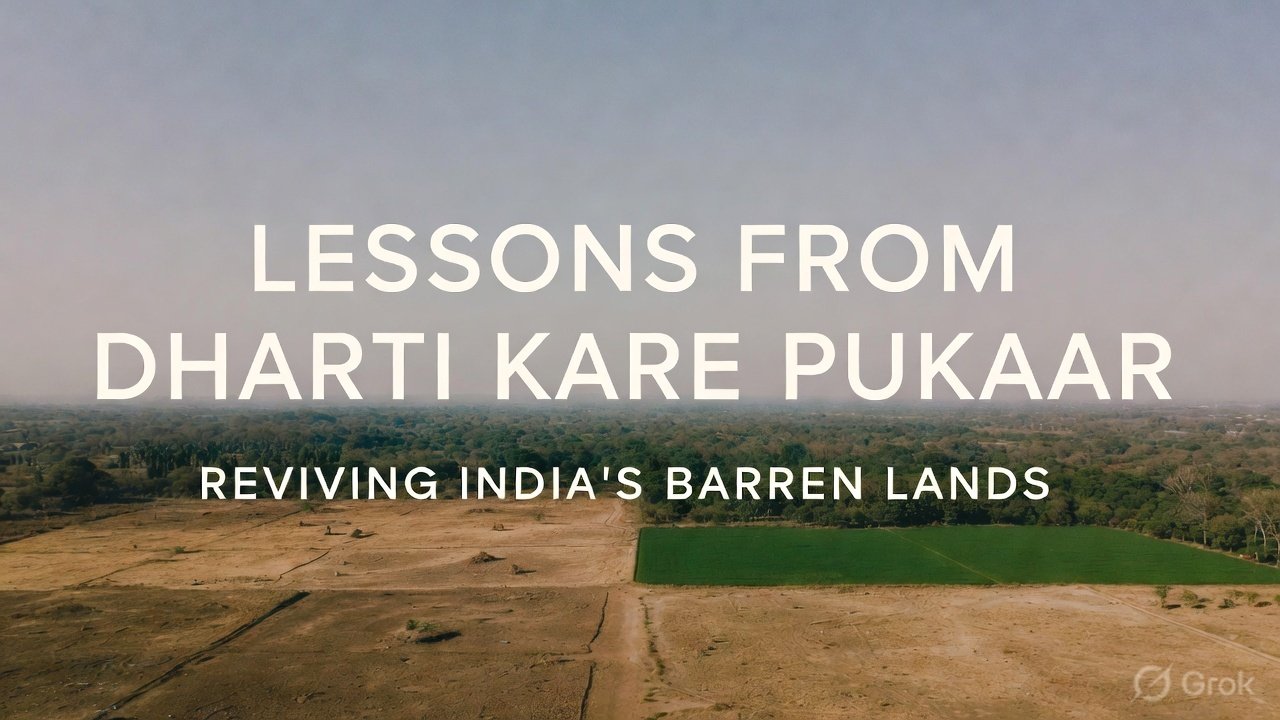
In the heart of India’s environmental discourse, the television series Dharti Kare Pukaar shines a spotlight on urgent ecological issues. Hosted by renowned wildlife filmmaker Mike Pandey, this thought-provoking show, broadcast on DD National, delves into sustainable practices and conservation efforts under the banner of Mission LiFE (Lifestyle for Environment).
Mission LiFE, an initiative championed by the Indian government, encourages individuals and communities to adopt eco-friendly lifestyles to combat climate change. The episode emphasizes how restoring wastelands not only revives biodiversity but also supports livelihoods and contributes to India’s commitment to restore millions of hectares of degraded land by 2030. India has pledged to rehabilitate 26 million hectares under global frameworks like the Bonn Challenge, with progress reports highlighting advancements in soil health and carbon sequestration.
Understanding India’s Wastelands
Wastelands in India encompass a variety of degraded terrains, from saline soils and eroded hills to invasive species-infested plains. These areas, often dismissed as unproductive, cover significant portions of the country’s landscape and pose challenges to agriculture, water security, and wildlife. The episode highlights how factors like overgrazing, deforestation, and climate variability have exacerbated degradation, but it also showcases hope through restoration stories.
A prime example featured is the Banni Grassland in Kutch district, Gujarat—Asia’s largest tropical grassland, spanning over 2,500 square kilometers. Once a thriving pastoral haven, Banni has faced severe threats from the invasive Prosopis juliflora, locally known as “gando baval” or the “mad tree.” Introduced in the 1960s to curb soil salinization and enhance green cover, this shrub has now encroached upon nearly half the grassland, outcompeting native species and altering the ecosystem.
Restoration Efforts: Community and Science in Action
The episode dives into grassroots restoration projects, where local communities play a pivotal role. In Banni, Community Forest Management Committees (CFMCs) have led the charge, uprooting Prosopis and reseeding with native grasses like Desmostachya bipinnata. By mid-2022, 26 such committees had restored nearly 3,000 hectares, collaborating with scientists from field stations like RAMBLE. These efforts involve mechanical removal of the invasive species, sometimes converting it into biochar through pyrolysis to minimize carbon emissions and create economic value.
The Gujarat government has ambitious plans, announcing the removal of Prosopis from 20,000 hectares to boost high-quality grass production for livestock. Restored sites, known as “vaadas,” are fenced and managed to prevent regrowth, demonstrating that continuous removal over three years significantly reduces reinvasion risks.
Studies reveal that these restored vaadas boast the highest soil organic carbon (SOC) density at 142.72 tonnes per hectare, making Banni a powerful carbon sink with an estimated 27.69 million tons of carbon stored in its soils overall. This underscores the dual benefits of restoration: enhancing biodiversity—home to species like the spiny-tailed lizard, migratory birds, and the endemic Banni buffalo—while aiding climate mitigation.
Challenges and Balanced Approaches
However, restoration isn’t without hurdles. The episode, through expert insights, addresses how Prosopis removal can impact local livelihoods, as communities rely on it for charcoal and fodder. Experts advocate for a “mosaic” approach: maintaining patches of invasive trees alongside restored grasslands to balance ecological and economic needs. Trenches around restoration sites, while protective, can hinder wildlife movement and livestock access, prompting calls for more inclusive strategies.
Viewer feedback on the episode echoes these sentiments, with suggestions to treat wetlands and grasslands as vital ecosystems rather than wastelands, and requests for English subtitles to make the content accessible amid complex Hindi terminology.
The Call to Action: Join the Movement
As India pushes forward with its restoration goals, stories like Banni’s remind us that sustainable practices can turn barren wastelands into thriving lifelines. Whether through community action or policy support, every effort counts in preserving our planet for future generations. Watch the full episode on YouTube and get inspired to make a difference today.