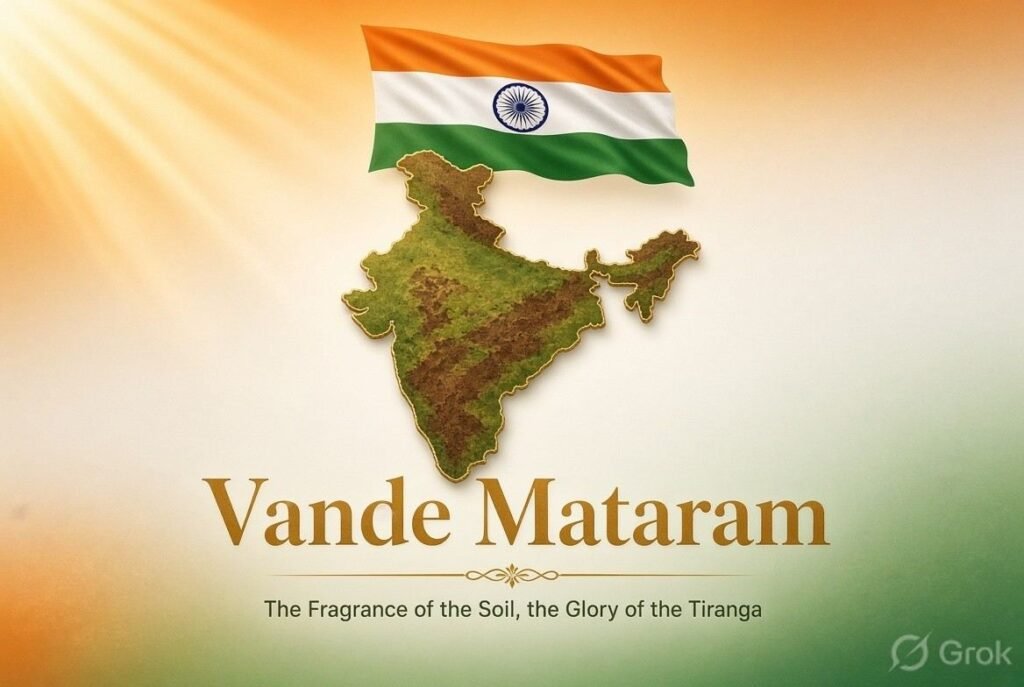
On the occasion of India’s 80th Independence Day in 2026, Doordarshan National released a moving tribute that captures the spirit of the nation in its purest form. Titled माटी की खुशबू, तिरंगे की शान और दिल में गूंजता एक स्वर ‘वन्दे मातरम्’! (The fragrance of the soil, the glory of the tricolour, and a voice echoing in the heart — ‘Vande Mataram’!), the video is a soulful rendition of India’s National Song.
It invites viewers to salute the immortal song that has inspired generations to dedicate themselves to the motherland. In just a few minutes of music and imagery, it connects the earth beneath our feet, the fluttering Tiranga, and the deep emotional resonance of a song that has lived in Indian hearts for a century and a half.
A Song Born from Devotion to the Motherland
Vande Mataram (“I bow to thee, Mother”) was composed by Bankim Chandra Chattopadhyay around 1875 and first appeared in his literary journal Bangadarshan. It later became a central part of his novel Anandamath (1882). Written in a richly Sanskritised Bengali, the poem personifies India as a divine mother — fertile, beautiful, nurturing, and powerful.
The opening lines paint a vivid picture of the land:
Vande Mataram
Sujalam, suphalam, malayaja shitalam
Sasyashyamalam, Mataram!
(Watered by sweet streams, rich with crops, cooled by the southern breeze, green with the harvest — Mother!)
These words celebrate not conquest or power, but the abundance and grace of the soil itself. Later stanzas deepen the imagery, describing the motherland as radiant with moonlight, filled with flowering forests, and as the source of knowledge, dharma, and strength.
The Rallying Cry of Freedom
What began as literature quickly became the heartbeat of the independence movement. Rabindranath Tagore first sang it publicly at the 1896 Indian National Congress session in Calcutta. During the 1905 Partition of Bengal and the Swadeshi movement, Vande Mataram transformed into a powerful slogan and marching song. Processions, student gatherings, and freedom fighters carried it as both prayer and defiance.
The British authorities banned its public recitation, yet it continued to be sung in secret meetings, prisons, and even on the way to the gallows. Revolutionaries including Bhagat Singh and members of the Indian National Army under Subhas Chandra Bose drew courage from its lines. On the night of 14–15 August 1947, as India prepared for independence, the first verse of Vande Mataram was sung in the Constituent Assembly.
In 1950, the Constituent Assembly accorded it equal status with the National Anthem Jana Gana Mana. President Rajendra Prasad declared that Vande Mataram, which had played a historic role in the struggle for freedom, “shall be honoured equally” with the anthem.
A Historic Moment in 2026
The year 2026 holds special meaning. It marks both the 80th Independence Day and the 150th anniversary of Vande Mataram. For the first time, the National Song was rendered from the ramparts of the Red Fort during the official Independence Day celebrations, before the National Anthem.
NCC cadets and volunteers formed the words “Vande Mataram” on the ground, floral decorations celebrated the song, and Indian Air Force helicopters showered petals while carrying banners marking 150 years of the song. The Doordarshan video released around this time serves as a public, accessible expression of the same spirit — bringing the song into homes across the country with images of the land, the flag, and the collective voice of the people.
Why the Song Still Moves Us
Vande Mataram endures because it is not merely a political anthem. It is a love song to the motherland. It speaks of soil and rivers, of moonlight and harvests, of strength and devotion. In an age of rapid change, it grounds us in something older and deeper: the idea that the land itself is sacred, and that belonging to it carries both gratitude and responsibility.
The Doordarshan rendition captures this beautifully. The music rises and falls with the emotion of the lyrics. The repeated refrain Vande Mataram feels both intimate and collective — a personal bow and a national chorus at once. Comments on the video reflect the response: simple, heartfelt declarations of pride, wishes for Independence Day, and quiet recognition that this remains one of the most beautiful expressions of the song.
A Living Legacy
As India celebrates 80 years of freedom and 150 years of this immortal song, Vande Mataram continues to do what it has always done: awaken a sense of shared belonging. It reminds us that the nation is not only institutions and borders, but also the fragrance of the soil, the pride of the Tiranga, and the voice that rises from millions of hearts.
Vande Mataram.
Bharat Mata ki Jai.