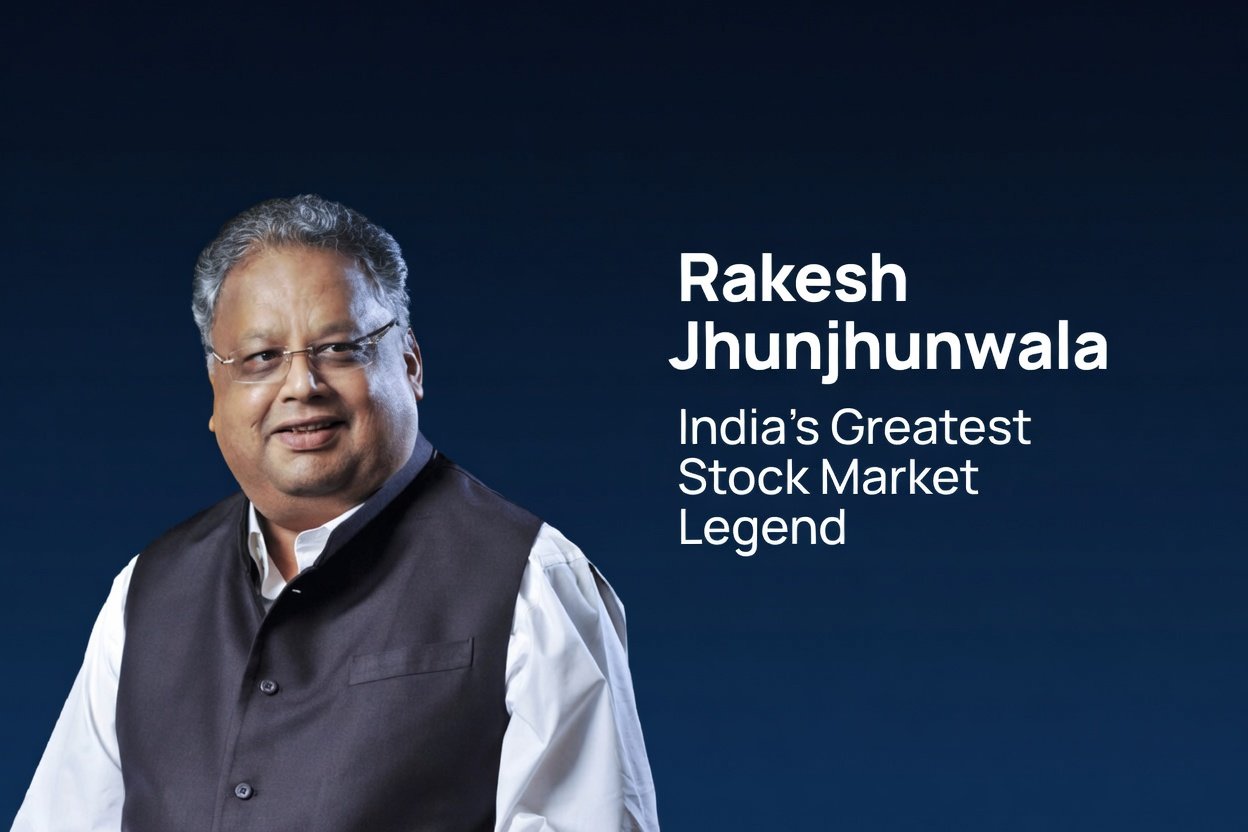
In a powerful clip from Raj Shamani’s Figuring Out podcast (Episode 206), Prashant Desai – a close associate of the late Rakesh Jhunjhunwala – pulls back the curtain on the mindset that turned a young chartered accountant into one of India’s richest and most admired investors. Known as “India’s Warren Buffett,” Jhunjhunwala (fondly called “Rakesh Bhaiya” by those who knew him) built a multi-billion-dollar empire through sheer conviction, not some hidden trading formula.
The short but profound clip reveals why Jhunjhunwala wasn’t just rich — he became a national icon. Here’s the full story straight from someone who sat with him, watched him trade, and learned directly from the master.
There Is No Formula — Success Is Luck Defined as “God and Elders’ Blessing”
People often assume that if someone makes extraordinary money in the market, they must possess a secret formula. Jhunjhunwala repeatedly told his inner circle the opposite.
“There is no formula in business… It is not a formula, friend, it is luck.”
And he defined luck in his own unique way. A deeply spiritual man, Jhunjhunwala had a temple in his office. Above it was written: “God and Elders’ Blessing.” That, he believed, was the true meaning of luck.
Prashant Desai recalls how Rakesh Bhaiya would visit their office and consistently hammer home this philosophy — a rare blend of humility and faith in a cut-throat market.
The Lupin Story: Generosity Meets Radical Humility
One of the most memorable anecdotes Prashant shares is about a real-life incident involving Lupin Ltd.
Imagine being Jhunjhunwala’s friend. You walk into his room while he’s glued to the trading terminals and casually ask, “Rakesh, what are you buying?” He replies, “I’m buying Lupin. If you want, take it.”
A CFO from Kolkata once experienced the exact same thing and later told Prashant the story. Curious, Prashant asked Jhunjhunwala why he was so open with his picks.
Jhunjhunwala’s reply was pure class:
“Prashant, if the stock price increased because I bought it, then this market would not be here. Who am I? I am nothing in this market. Lupin’s stock price will only increase if the company’s performance improves… The entire work has been done by Deshbandhu Gupta and his daughters. I was lucky that I took a point of view on them. This guy was lucky that I told him — the risk is his.”
This single story captures the essence of the man: zero ego, zero illusion that his personal buying power moves markets. He took his view, accepted his risk, and let the company’s promoters do the real work.
Why Did Only Rakesh Jhunjhunwala Become a Brand?
Prashant poses the natural follow-up question: If there is no formula and success is mostly luck, then why did Jhunjhunwala become such a massive brand while many others who earned even more money never did?
His answer is insightful:
- Jhunjhunwala was the biggest bull on India. Even today, Prashant says, he hasn’t seen anyone more optimistic about the country’s future.
- He never wore his heart on his sleeve — he spoke openly and fearlessly.
- He went on CNBC and educated retail investors about India’s structural growth story.
- He constantly talked about why everyone should believe in India and invest in its stock market.
In short, he didn’t just make money — he became the voice of India’s capital market optimism.
Capital Markets: India’s Greatest Advantage
Jhunjhunwala was passionate about the role of capital markets in India’s growth. He would explain the fundamental difference between India and China:
“In India, the capital markets allocate capital. If you are efficient, you will get money. If I am inefficient, I will not. In China, because it is an autocracy, the state allocates capital… That is why China’s banks are in trouble.”
He pointed out that India’s top Nifty companies have some of the highest Return on Equity (ROE) in the world precisely because the market rewards efficiency.
Trading vs Investing: Two Different Mindsets, One Legendary Investor
Prashant reveals that Jhunjhunwala operated with two clear business models:
- Trading — to build capital (short-term, price-action and volume driven, never day or week trading).
- Investing — to build long-term wealth (based on deep fundamental research and India’s growth story).
Their office even had “10 Commandments of Trading” and “10 Commandments of Investing” — not rigid formulas, but guiding principles.
He could sit in front of any screen in any country and make money because he traded on market sentiment reflected in price and volume, not personal opinion.
Key Lessons Every Investor Can Apply Today
From Prashant Desai’s intimate account, here are the timeless takeaways from Rakesh Jhunjhunwala’s life:
- Stop looking for formulas — Focus on probability and possibility.
- Cultivate humility — Credit the promoters and the company, not yourself.
- Define your own luck — Faith, preparation, and elders’ wisdom matter.
- Be a vocal bull on India — Back your optimism with research and action.
- Treat investing as a full-time profession — Avoid tips; do your homework or trust professionals.
- Separate trading from investing — Use different mindsets for different goals.
Rakesh Jhunjhunwala didn’t just get rich. He inspired millions of Indians to believe in the power of the stock market and the greatness of their own country.
Watch the full clip here: Rakesh Jhunjhunwala Story | Raj Shamani Clips
What’s your biggest takeaway from Rakesh Bhaiya’s philosophy? Drop it in the comments — and remember: invest in the realm of possibilities.
Keep figuring out.